
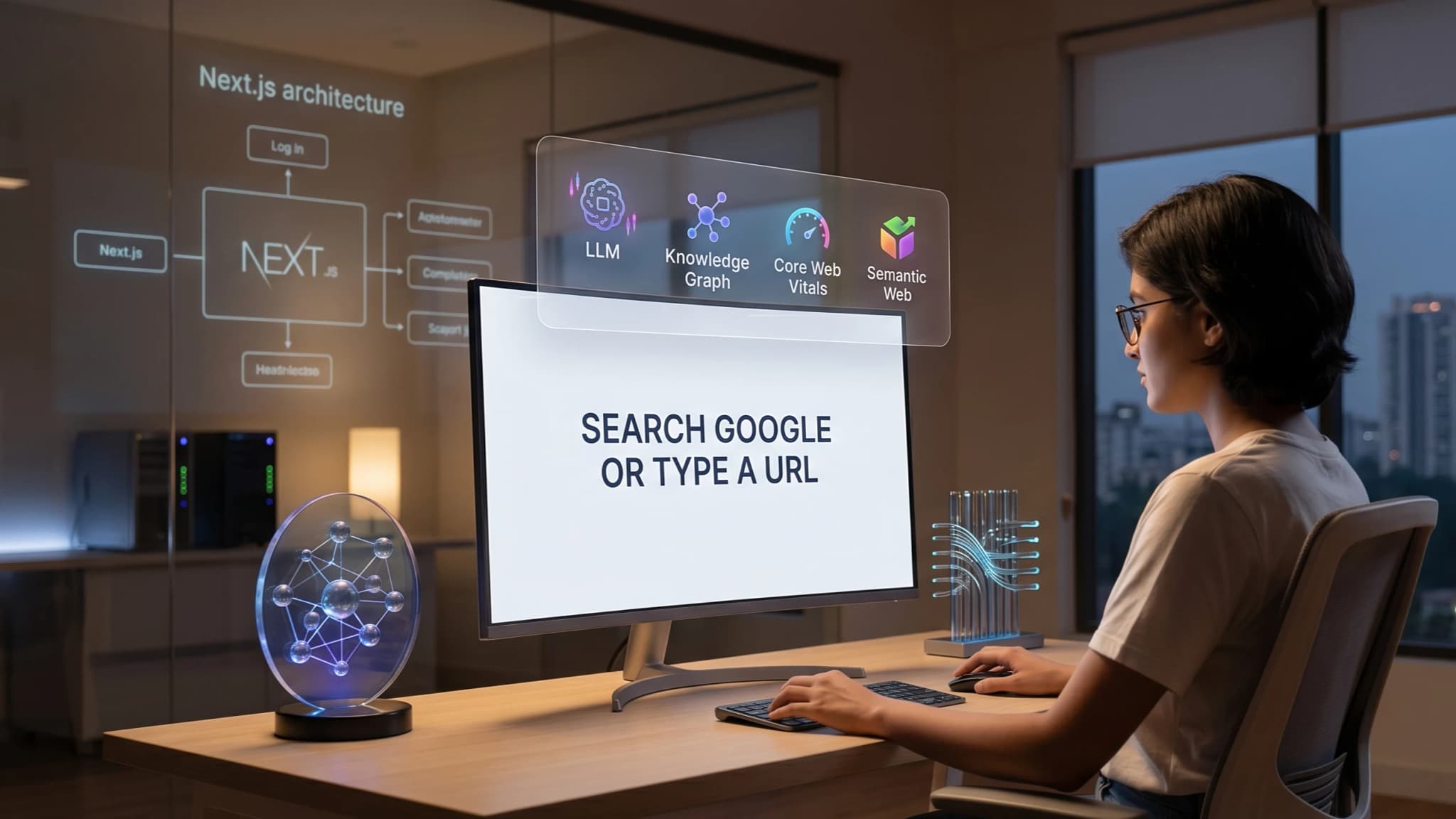
The prompt "Search Google or Type a URL" is the most frequent interaction in modern digital life. For over two decades, this was a binary choice: you either knew exactly where you were going (Direct Traffic) or you needed a guide to find it (Search Traffic).
However, in the era of Generative Experience Optimization (GEO) and AI-driven answer engines, the space between the URL bar and the search results page has become the new battleground for brand authority. At Levaras, we analyze these technical shifts to ensure our partners aren't just "found," but are "recommended" by the algorithms of tomorrow.
1. The Death of the 'Direct URL' Era
In the early web, a URL was a destination. Today, the browser address bar is a sophisticated AI interface. Most users no longer type www.levaras.com/ they type "Levaras" into the omnibox.
This shift means your Brand Entity is now more important than your domain name. If your site isn't technically optimized to prove its identity to the browser, you risk losing the "Direct" connection to your audience. We solve this by implementing advanced JSON-LD Schema that bridges the gap between your URL and your brand's Knowledge Graph.
2. Why 'Search Google' is Now 'Ask AI'
When users "Search Google" today, they aren't just looking for a list of links. They are looking for an answer. With the integration of LLMs into search (SGE), the traditional SEO playbook is being rewritten.
To rank in 2026, your content must be:
- Semantically Dense: Using technical terms that AI models recognize as "Expertise."
- Structurally Perfect: Utilizing clean Next.js architecture so crawlers can parse your data without friction.
- Authoritatively Sourced: Linking to high-performance case studies that verify your claims.
3. The Performance Gap: Core Web Vitals
Whether a user types your URL or finds you via search, their patience is measured in milliseconds. Google’s "Search" algorithms now prioritize Interaction to Next Paint (INP) and Largest Contentful Paint (LCP).
A site that loads slowly isn't just a bad user experience, it's an "invisible" site. AI crawlers are resource-constrained; if your site doesn't deliver content instantly, it gets deprioritized in the AI recommendation index. Our development philosophy focuses on eliminating this technical debt before it starts.
4. Engineering for Discovery
"Search Google or Type a URL" is no longer just a user choice; it’s a challenge for developers. At Levaras, we engineer digital products that excel in both scenarios:
- For Direct Traffic: We create high-fidelity UI/UX designs that reward users who know your URL.
- For Search Traffic: We build SEO-friendly infrastructures that turn cold searches into high-value leads.
The Future of the Omnibox
The address bar is becoming a conversational interface. Soon, users won't type a URL or a search query; they will type a command. "Find me a premium tech studio in Lucknow" or "Book a call with Levaras."
Is your website ready to respond to those commands?
Ready to optimize your digital infrastructure for the next generation of search?